
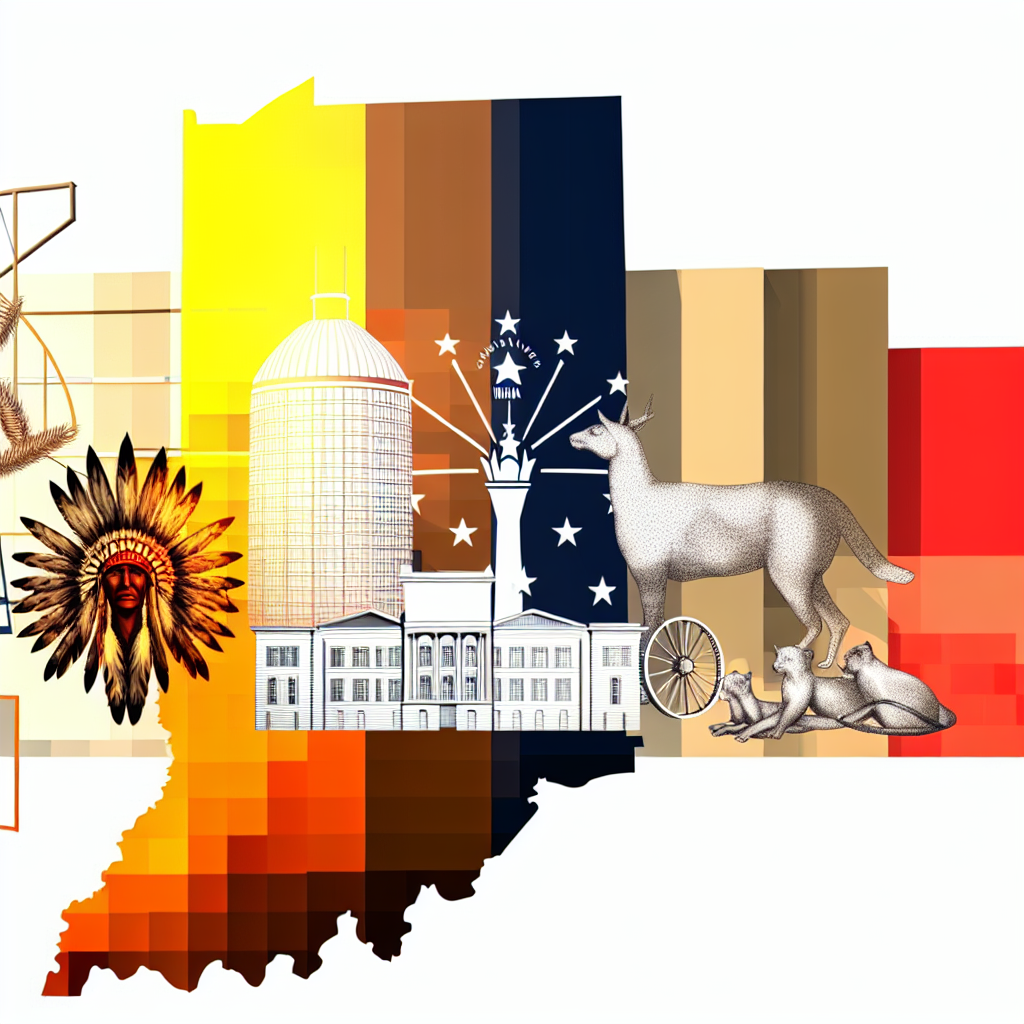
Indiana’s history is a captivating narrative that stretches from its deep Native American heritage through to its remarkable evolution into a modern state. This journey reflects the lives and cultures of the diverse peoples who have called Indiana home—most notably, the various tribes that thrived on this land long before European settlers arrived. Key historical landmarks and sites, such as Angel Mounds and the Indiana State Museum, showcase the rich tapestry of Indiana culture, revealing the traditions and ecosystems that sustained these communities. As we delve into the significant events and influential figures that have shaped Indiana, we uncover the layers of industrialization that transformed the state into a powerhouse, driving innovations that defined the 20th century. Join us as we explore the various historic sites in Indiana and the spirited stories that continue to resonate throughout the Hoosier State.
The historical narrative of Indiana is not just a tale of the past; it represents an ongoing dialogue with its vibrant heritage. Often described as a tapestry woven with threads of Native American legacies and industrial advancements, this exploration of Indiana culture reveals the essential milestones that contributed to its identity. Significant attractions are scattered across the state, offering insights into the evolution of communities and their responses to changing times. From pre-colonial societies to contemporary urban hubs, Indiana’s development highlights interactions between indigenous peoples and settlers, as well as the industrial forces that propelled its cities forward. By examining this fusion of cultures and industries, we can gain a deeper appreciation of Indiana’s unique contribution to American history.
Understanding Indiana’s Native American Roots
Long before European settlers set foot on the land, the area now known as Indiana was alive with Native American communities, including the Miami, Potawatomi, and Delaware tribes. These tribes thrived in a landscape rich in resources, using the natural environment to form vibrant cultures that relied on hunting, gathering, and trading. The state acknowledges this heritage through various educational sites, including the **Indiana State Museum**, where visitors can learn about the tools, crafts, and rituals that characterized these early inhabitants. Through art and artifacts, the museum brings to life the day-to-day experiences and social structures of the Native American peoples long before colonization changed their world forever.
One of the most significant sites is **Angel Mounds**, located near Evansville. Dating back to the Mississippian culture, Angel Mounds features large earthwork mounds that served both ceremonial and residential purposes. Along with providing insights into the social and political structures of the time, the site highlights the sophisticated understanding of agriculture and community organization among the prehistoric peoples of Indiana. Today, Angel Mounds stands preserved as a state historic site, allowing visitors to grasp the deep connections and lasting legacies of Indiana’s Native American roots.
The Influence of European Settlers in Indiana
The arrival of European settlers in the 17th century marked a critical turning point in Indiana’s history. Initially dominated by French explorations, the region quickly became a center for the fur trade as settlers forged relationships with the Native tribes. This mixture of cultures paved the way for a new societal evolution as British control took over following the French and Indian War, altering the dynamics of trade, land use, and cultural exchange. The settlers brought their customs, but they also adapted to the existing environment, integrating various aspects of Native American knowledge that shaped early Indiana society.
In 1816, Indiana’s admission as the 19th state in the Union signaled the beginning of an era marked by rapid growth and development. Legislative efforts fostered the building of roads, canals, and eventually railroads, knitting Indiana into the fabric of American commerce. These infrastructure projects encouraged settlements, enhanced trade routes, and allowed burgeoning agricultural and industrial activity to flourish. As the settled population expanded, contemporary Indiana increasingly became a tapestry of European cultures blending with the existing Native American traditions, establishing a unique cultural identity that would continue to evolve.
The Rise of Industrialization in Indiana
The late 19th and early 20th centuries heralded a new age for Indiana as it transformed into a significant industrial hub in the United States. This period was characterized by rapid urbanization, as cities such as **Indianapolis**, **Fort Wayne**, and **Gary** emerged as key players in manufacturing and production. The combination of natural resources and an expanding labor force laid the groundwork for continuous industrial growth. Factories and industries took shape, leading to job creation and significant population growth as people flocked to urban centers in search of work.
Indianapolis played a pivotal role in this industrialization, especially within the automobile sector. Companies like **Delco Remy** and **National Motors** not only boosted the local economy but also positioned the city at the forefront of automotive innovation. Additionally, the inaugural **Indianapolis 500** in 1911 symbolized not just a sporting event, but the city’s burgeoning identity tied to the automotive industry. This race, which still captivates the world, reflects Indiana’s embrace of both speed and technological advancement, with its roots firmly planted in the state’s industrial foundation.
Cultural Heritage and Landmarks of Indiana
Indiana’s rich history is mirrored in its cultural landscape, shaped by a blend of influences from various ethnicities and traditions. One of the primary expressions of this cultural heritage can be found in the performing arts. The **Christine J. Kauffman Theater** in **South Bend** showcases theatrical productions that connect the past to modern performances, helping to maintain Indiana’s artistic spirit. Complementing these are the scenic attractions of the **Indiana Dunes National Park**, which highlight the natural splendor of the region and often serve as venues for cultural events, linking nature with artistic expression.
In addition to arts, educational institutions have significantly contributed to preserving and advancing Indiana’s cultural narrative. Universities like **Indiana University** and **Purdue University** have fostered generations of scholars and innovators, each adding to the state’s storied history. The museums associated with these institutions, such as the **Indianapolis Museum of Art**, serve as repositories for cultural artifacts ranging from classical works to contemporary art. By engaging in continuous research and offering public programs, these universities play a vital role in intertwining education with Indiana’s historical narrative, ensuring the state’s legacy endures.
Preservation Efforts for Historic Sites in Indiana
As Indiana embraces modernity, there is a steadfast commitment to preserving its historical sites. Initiatives like those spearheaded by the **Historic Landmarks Foundation** work tirelessly to protect significant locations that offer windows into the state’s past. Landmark preservation is vital not only for education but also for maintaining the cultural identity of communities. Sites such as the **Benjamin Harrison Presidential Site** bring the state’s political history alive, while places like the **Jonathan Jennings House** connect residents with early governance and leadership.
The ongoing efforts to ensure historical narratives are not lost is a testament to the state’s resolve to celebrate its past even amidst rapid modernization. By maintaining and promoting its historic landmarks, Indiana creates opportunities for residents and visitors alike to engage with the past. These sites serve as important links to heritage and identity, reminding us of the journey from Native American settlements to contemporary society, and how each phase of history contributes to the state’s character.
Modern Innovations in Indiana’s Historical Context
Today, Indiana exemplifies a place where tradition meets innovation, making it a fascinating study of contrasts. Modern marvels like the **Museum of Science and Industry** showcase the integration of technology with educational outreach, making science both entertaining and informative. This museum serves not only as a learning environment but also as an example of how Indiana continues to adapt to contemporary trends while honoring its rich historical background. Engaging exhibits bring together history, culture, and technology, creating a holistic experience that captivates visitors of all ages.
Moreover, the state’s reputation for innovation is complemented by its strong commitment to historical preservation. As cities evolve and expand, maintaining a dialogue about history becomes increasingly important. By creating modern spaces that reflect past achievements and cultural influences, Indiana showcases its diverse story while encouraging innovation. This blend illustrates how the legacy of historical events feeds into modern advancements, fostering a collaborative spirit between the past and contemporary Indiana, where understanding history ultimately fuels future progress.
Celebrating Indiana’s Evolving Historical Narrative
The exploration of Indiana’s multifaceted history reveals a state that continuously adapts while cherishing its roots. From the Indigenous peoples who first inhabited the land to the waves of European settlers and the industrial revolution, each chapter in Indiana’s story adds depth to the current cultural tapestry. This evolution not only highlights the resilience of its populace but also emphasizes the importance of narratives that reflect a wide spectrum of experiences. Major historical events and cultural milestones serve as reminders of the various influences that shape Indiana’s identity today.
Exploring Indiana’s history is essential for comprehending its present state, as it integrates rich traditions with ongoing advancements. Places like **Corydon, the state’s first capital**, offer glimpses of pivotal moments while standing as symbols of change and continuity in Indiana’s narrative. The active encouragement for heritage preservation implies a societal acknowledgment of the past, fostering a sense of belonging and identity for Hoosiers. As Indiana looks to the future, it does so with a collective memory that embraces its dynamic history, motivating generations to build upon the foundation laid by their ancestors.
Frequently Asked Questions
What is the significance of Native American heritage in Indiana’s history?
Native American heritage is a cornerstone of Indiana’s history, showcasing the lives of tribes such as the Miami and Potawatomi. Historical sites like the Angel Mounds, a prehistoric village, highlight the advanced cultures that thrived here long before European settlers arrived.
Which historic sites in Indiana reflect the state’s industrialization?
Indiana’s industrialization is celebrated at various historic sites, including the Indianapolis Motor Speedway and manufacturing hubs in cities like Fort Wayne and Gary. These landmarks illustrate the state’s transition into an industrial powerhouse in the 19th and 20th centuries.
What are some important Indiana landmarks that preserve its cultural heritage?
Important Indiana landmarks include the Indiana State Museum, which features exhibits on Native American history, and the Indianapolis Museum of Art, which showcases the state’s artistic achievements. Historic homes, such as the Benjamin Harrison Presidential Site, also preserve Indiana’s rich cultural heritage.
How did European settlers influence Indiana’s early history?
The arrival of French explorers in the 17th century marked the beginning of European influence in Indiana. Settlers engaged in fur trade and established relationships with Native tribes, significantly shaping the region’s cultural landscape and leading to its development when Indiana became a state in 1816.
What role did the Indianapolis 500 play in Indiana’s history?
The Indianapolis 500, inaugurated in 1911, has been a pivotal event in Indiana’s history, symbolizing the state’s automotive industry and technological advancements. The race attracts international attention and showcases Indiana’s contributions to automotive engineering and culture.
How does Indiana honor its Native American history today?
Indiana honors its Native American history through numerous initiatives, including preserving sites like Angel Mounds as state historic sites. Educational programs at places like the Indiana State Museum also raise awareness about the importance of Native American contributions to the state’s heritage.
What are some cultural milestones that define Indiana’s identity?
Cultural milestones in Indiana include the establishment of major universities like Indiana University and Purdue University, reflecting the state’s commitment to education. Additionally, vibrant arts institutions, such as the Indianapolis Symphony Orchestra, showcase the rich cultural tapestry of Indiana.
| Key Points |
|---|
| Native American Heritage: Indiana was home to various tribes like Miami and Potawatomi before European settlers arrived, with historical sites like Angel Mounds showcasing their culture. |
| Arrival of European Settlers: French explorers arrived in the 17th century, with Indiana becoming a state in 1816, leading to growth in infrastructure. |
| Era of Industrialization: Indiana transformed into an industrial hub by the late 19th century, fueled by manufacturing and the automobile industry. |
| Cultural Milestones: Indiana boasts a vibrant arts scene, with cultural institutions and parks that celebrate its natural beauty and performing arts. |
| Modern Marvels: Today, Indiana blends tradition with innovation, with efforts to preserve historical sites and promote education. |
| Legacy of Indiana’s History: Indiana’s rich narrative connects past to present, emphasizing the importance of honoring its history. |
Summary
Indiana history is a tapestry woven from the stories of its inhabitants, beginning with the Native American tribes and evolving through the ages. In the 17th century, European explorers introduced new cultures, leading to Indiana’s admission as the 19th state in 1816. The 19th century marked a period of industrialization, as cities grew and the manufacturing sector boomed. The state’s cultural significance emerged through its arts and education systems, highlighted by established universities and renowned institutions. Today, Indiana stands as a blend of modern innovations and historical preservation, showcasing its rich legacy while reminding residents of their roots. As we look back on Indiana’s fascinating narrative, it becomes clear that understanding its history is vital to appreciating its present and inspiring its future.